

Everyone wants lower mortgage rates. This is no secret.
Ever since they surged higher in early 2022, we’ve wanted them to come back down.
Their meteoric rise from 3% to 7%+ quickly eroded housing affordability and pushed the mortgage and real estate industries into recession.
Home sales hit 30-year lows, lenders closed shops, and the housing market essentially came to a standstill.
But lately, mortgage rates have been steadily improving, hitting the lowest point since mid-2022 by some measures.
The problem now might be WHY mortgage rates are falling.
Are Mortgage Rates Falling for The Right Reasons?
Mortgage rates are essentially driven by economic conditions.
In short, if the economy is cooling, rates tend to come down to encourage more lending and growth.
If the economy is running too hot, rates rise to curb excess borrowing and cool things off.
Very recently, mortgage rates have rallied due to concerns about AI taking all of our jobs.
And despite a hot inflation report this morning via the Producer Price Index (PPI) report, which would typically lead to higher bond yields (and mortgage rates), they continued to sink.
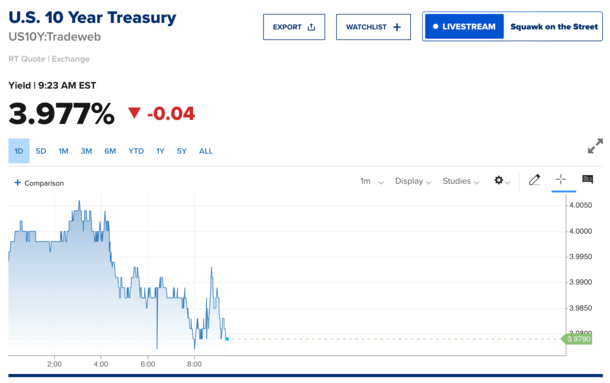
In fact, the 10-year bond yield fell below the key 4% threshold for the first time since November.
Normally, this might be viewed as good news, as 30-year fixed mortgage rates tend to move in lockstep with 10-year bond yields.
But if this is happening while inflation seems to be worsening, it points to bigger problems in the economy.
Notably, that we might be on the cusp of another recession, driven by fears that AI could soon replace large swaths of white-collar workers.
That would lead to a huge uptick in unemployment, outweighing the inflation problem.
As such, the Fed could continue to cut its own federal funds rate to address this potential downturn.
Long story short, recession fears driven by AI trump near-term inflation concerns.
So while there might be renewed worries of stagflation, they are currently being outweighed by a wider economic slowdown.
Is the AI Job Displacement Narrative Real or Just Misplaced Fear?
The big question though is if this whole AI-driven recession is real, or just fear mongering.
It all kind of got going earlier this week thanks to an essay by Citrini Research that painted an economy demolished by AI.
The whole robots take our jobs because you can just use a chatbot instead, leading to unemployment at 10% or higher!
But it was refuted just a couple days later by Citadel Securities, which argued that AI adoption will be slow and once it does set in, it will lead to higher productivity at a lower cost (sounds like new Fed chair Kevin Warsh).
This will apparently lead to lower prices and increased “real purchasing power for consumers, which in turn increases consumption.”
The firm noted that “every major technological leap,” whether it was the steam engine or the internet itself, led to positive economic outcomes.
So why would AI be any different?
They have a point and noted that software job listings are actually on the rise. Someone has to work among all this new tech right?
Either way, it seems like the rollout will be longer than anticipated, similar to the original hype of the internet that took years to turn into the e-commerce powerhouse it is today.
We also all know the internet led to scores of new jobs and opportunities, including this very website you’re on right now.
So it might not be all doom and gloom.
It could just be a classic flight to safety from stocks to bonds because last I checked, the stock market was near all-time highs on a lot of speculative AI-driven growth.
The Health of the Economy Is More Important Than Low Mortgage Rates
While low mortgage rates are good for home buyers and existing homeowners looking for payment relief, we want them to come down for the right reasons.
The right reason is generally low inflation, a balanced labor market, and perhaps tighter spreads due to increased MBS appetite.
The wrong reasons are a recession and rising unemployment, at which point you start to cancel out the benefit of lower interest rates.
After all, if prospective home buyers don’t have a job, it doesn’t matter how low mortgage rates go.
What good is a 4% mortgage rate if you don’t have the income to pay the mortgage each month?
My guess is this is a lot of near-term noise and simply more positioning from investors being uber-bullish to being more middle of the road or even defensive.
That could mean lower stock prices and lower bond yields, which equates to lower mortgage rates.
But likely nothing drastic, perhaps just a more solid 5-handle for the 30-year fixed as the year goes on.

- Are We Approaching Careful What You Wish for Territory for Mortgage Rates? - February 27, 2026
- Is It Too Soon to Talk About 4% Mortgage Rates Again? - February 26, 2026
- Nation’s Top Mortgage Lender Funded $163 Billion in 2025, a 17% Annual Increase Driven By Refinances - February 25, 2026