Maybe the reopening of the Strait of Hormuz is the ticket to lower mortgage rates.
After all, that is essentially what caused them to jump about 75 basis points since the end of February.
There was really no other explanation for the abrupt rise in mortgage rates over the past few months.
So if we’re able to unravel that move via normal transit through the key waterway, mortgage rates should logically go back to those levels.
If that’s indeed the case, we could eventually get back to a sub-6% 30-year fixed again.
Lower Oil Prices Give Mortgage Rates a Push Down
Thanks to the accord in the Middle East, oil prices are now back to pre-war levels.
Brent crude futures fell to below $74 per barrel, which is the lowest levels since the U.S. and Israel launched airstrikes on Iran in late February.
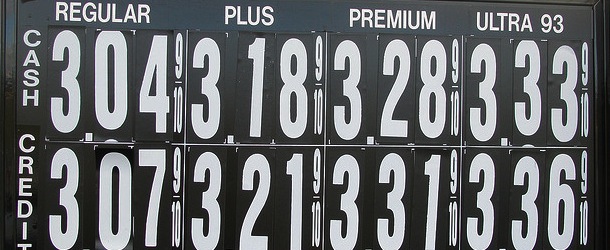
Similar drops were seen with WTI oil futures, though that didn’t stop President Trump from complaining on social media that oil companies haven’t lowered gas prices quickly enough.
And that actually brings up a good point. It’s going to take time for the multi-month disruption to work itself out.
The Strait of Hormuz was effectively closed for about 3 and ½ months during the conflict.
There’s a lot of backlog and logistical stuff that needs to be sorted out to get us back to square one.
Even then, there might still be a premium baked in to oil prices and mortgage rates to account for the new risk of future closures.
In other words, while it’s good news that things are normalizing and oil prices are down, mortgage rates might not return to those low levels seen at the end of February.
As it stands, the 30-year fixed is priced around 6.50% thanks to today’s move lower, but remains about 50 basis points (bps) above the pre-war lows.
Is Oil the Only Key Factor for Mortgage Rates?
While I’ve argued that the rise in mortgage rates this year has pretty much boiled down to one thing, the war, things are always in flux.
Mortgage rates don’t exist in a vacuum and can be affected by myriad factors, which are constantly changing.
Case in point, while the war was going on, there were growing concerns that the tech industry has overheated.
We’ve seen stocks surge despite the war and the $100 per barrel oil, seemingly ignoring geopolitics in favor of massive returns.
This has caused many to sound the alarm that things are getting frothy again, with valuations rivaling the dot com boom and bust era.
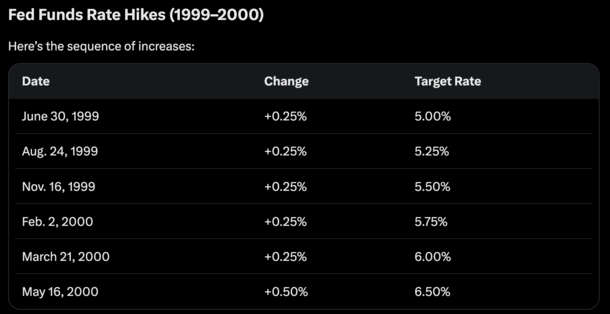
There are certainly some parallels between now and the late 1990s. Back then, the Fed began a hiking campaign in mid-1999 to cool things off.
They raised the fed funds rate six times, including a 50-basis point hike in May 2000 after the stock market had peaked.
Perhaps that will happen again this cycle, though as it stands, there’s only one possible 25-bp hike on the table for the year.
Still, that puts some upward pressure on mortgage rates beyond just the energy crisis that’s apparently sorting itself out.
So taken together, we’ve got some upside risk due to sky-high tech valuations, along with some baked in risk associated with geopolitics.
That could make it difficult for the 30-year fixed to get back to below 6% again anytime soon.
Though if the peace deal holds up and we can at least move on from Iran, that could get mortgage rates on the right side of 6.50% again.
Read on: Try out my mortgage rate calculator to compare different rates and payments fast!

- Rocket Mortgage Making the Switch From FICO to VantageScore - September 28, 2026
- What Can Save Mortgage Rates? - September 28, 2026
- What’s Next for Mortgage Rates?7.50%? 8%? - September 24, 2026