
Just days after mortgage rates hit fresh 52-week highs, bond yields also reached their highest point in over a year.
The 10-year bond yield, which serves a bellwether for consumer mortgage rates, climbed above 4.60% late Sunday evening on renewed inflation concerns related to the ongoing conflict in the Middle East.
The more time that goes on, the more it feels like the opening the Strait of Hormuz will be pushed further out.
In the meantime, oil prices are climbing back to multi-year highs, flipping odds from Fed rate cuts to Fed rate hikes.
That’s putting even more pressure on the spring home buying season, which was looking hopeful until the conflict began in late February.
Bond Yields Rise to Highest Levels Since Early 2025
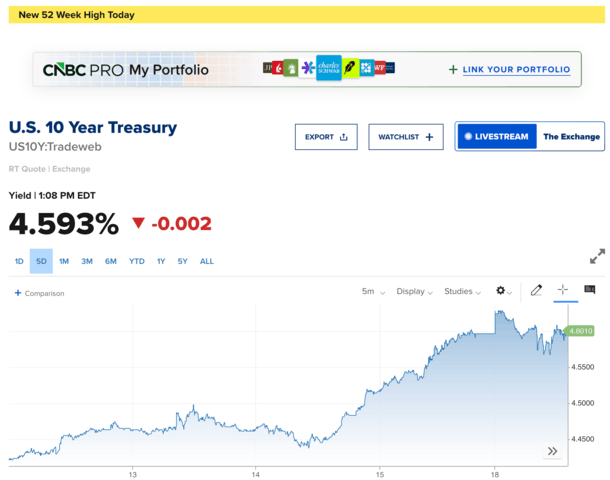
The 10-year bond yield now sits at a new 52-week high (note the little yellow banner from CNBC!), and hasn’t been higher since January 2025.
Back then, the 30-year fixed climbed as high as 7.25%, which was enough to dampen the housing market and give home buyers pause.
At the time, the 10-year yield reached about 4.75%, but thanks to wider spreads, mortgage rates were quite a bit higher.
The spread between the 30-year fixed and 10-year yield was around 250 basis points back then, wider due to concerns about prepayment activity (many expected rates to drop and refinancing to ramp up).
That indeed turned out to be the case, and since then spreads have come in quite a bit.
At last glance, they’re closer to 200 bps, so mortgage rates have improved a lot thanks to spreads alone.
If we still had the 250-bp spread, the 30-year fixed would be priced around 7.125% today.
Instead, it’s closer to 6.625%, which is the one silver lining in an otherwise dismal situation.
On the one hand, mortgage rates are a lot higher than they were at the beginning of March, when they were just barely sub-6%.
But they’re still a fair amount lower than they were a year ago, though that gap is beginning to close.
More Pressure on Mortgage Rates to Return to 7% Range
The latest narrative on mortgage rates is that they could move even higher than they already have.
As noted, we are up about 0.625% since the beginning of March when the 30-year fixed was just below 6%.
That’s a pretty sizable move, though mortgage rates were at 3.5-year lows at the time.
So they had risen from a pretty good place.
But any hope of a peace deal in the Middle East seems a long way out, especially with President Trump posting inflammatory stuff on his Truth Social platform in the past 48 hours.
It’s the same old rhetoric telling Iran to surrender or else, with Trump saying, “For Iran, the Clock is Ticking, and they better get moving, FAST, or there won’t be anything left of them. TIME IS OF THE ESSENCE!”
In the meantime, Brent oil prices are back above $110 per barrel and everyone is worried inflation is going to tick higher again.
Bonds aren’t loving it, hence the higher yields, which translate to higher mortgage rates.
How or when that will change is the big question mark. But the longer this impasse transpires, the bigger the threat of higher prices and possible rate hikes to combat another round of inflation.
Speaking of, the latest odds from CME FedWatch now have a possible hike on the board at a 5.4% probability for the July meeting.
Still very low, but cuts are nowhere to be found and the hike odds are up from literal zero a week ago.
In other words, the pressure is back on yields and mortgage rates to go higher from here, not lower.
A near-term win might simply be staying put at current levels and not inching back closer to the 7% range again.

- Mortgage Rates Back on the Rise After Biggest Bond Rally Since 2023 - October 23, 2026
- Tech Stock Selloff Leads to Mortgage Rate Plunge - October 22, 2026
- Stuck Mortgage Rates Starting to Hurt the Real Estate Industry - October 21, 2026