
The conflict in Iran was arguably bad enough for mortgage rates.
It sent them from the best levels since mid-2022 right back toward the high 6s again.
To make matters worse, we’ve gotten a series of hot jobs reports too, including today’s BLS report beat.
But that’s not all; a third threat is convexity hedging, where investors sell more Treasuries to hedge the rise in bond yields.
Taken together, there are now three forces putting upward pressure on mortgage rates.
Mortgage Rate Threat #1: The Iran Conflict
This is probably the biggest issue at the moment and the reason we no longer have a sub-6% 30-year fixed mortgage rate.
We had one as recently as March 1st, but then an unexpected conflict erupted and the Strait of Hormuz shut down.
Long story short, oil prices surged higher as a result and inflation fears were renewed, right after we seemed to finally beat it.
That pushed 10-year bond yields higher, a bellwether for 30-year fixed mortgage rates.
In the process, the 30-year fixed climbed from around 5.875% all the way to 6.75%, before easing somewhat recently.
But there’s a decent chance it could re-test those levels and move even higher if conditions don’t improve soon.
And last I checked, there doesn’t seem to be much of a resolution happening in the Middle East.
Mortgage Rate Threat #2: A Hot Labor Market
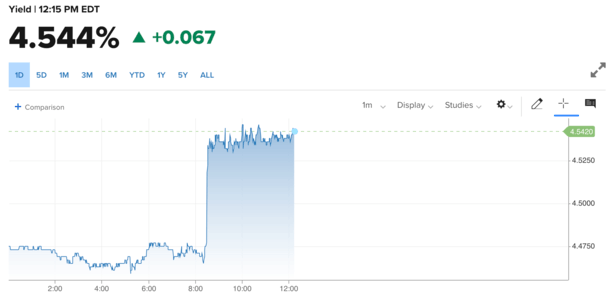
The next issue for mortgage rates is hot labor. We’ve seen a series of jobs beats lately, whether it was the ADP report on Wednesday or today’s monthly jobs report for May.
The BLS said 172,000 jobs were created last month, a huge beat over the 80,000 expected by forecasters.
Simply put, the labor market has proven to be resilient, despite many expecting weak jobs numbers to continue.
We had a series of cold jobs reports late last year, but it seems the labor market has firmed up since.
All else equal, this puts upward pressure on bonds yields and mortgage rates, as seen in the 10-year bond yield chart above.
Or at least doesn’t help mortgage rates drop due to any implied weakness in that department.
If it continues, it fuels inflation concerns, especially when combined with high oil (and gas) prices.
Mortgage Rate Threat #3: Convexity Hedging
The third and final issue mortgage rates face at the moment is a thing called “convexity hedging.”
It’s a strategy where investors sell Treasuries when yields rise, which can amplify the move higher.
So bonds sell off even more than they normally would, leading to even higher bond yields.
Because bond yields and mortgage rates move in relative lockstep, it puts additional upward pressure on interest rates.
In the process, the higher mortgage rates act as a deterrent to refinance, leading to longer duration on associated mortgage-backed securities (MBS).
By selling Treasuries, these investors can reduce their interest rate risk and rebalance their portfolios.
But more selling of these bonds means yields go up more than expected, resulting in higher mortgage rates.
To summarize, we’ve now got three headwinds for mortgage rates, including the war (higher oil prices), hot labor (adds to inflation concerns), and exaggerated Treasury selloff due to higher bond yields.
All of these forces have the potential to push the 30-year fixed back to 7% or higher, but so far mortgage rates have taken it all in stride. It could be a lot worse.

- Mortgage Rates Back on the Rise After Biggest Bond Rally Since 2023 - October 23, 2026
- Tech Stock Selloff Leads to Mortgage Rate Plunge - October 22, 2026
- Stuck Mortgage Rates Starting to Hurt the Real Estate Industry - October 21, 2026