
Just when it appeared that mortgage rates were chipping away, they’re back to new highs.
And not just any old highs, but the highest highs since President Trump took office for his second term.
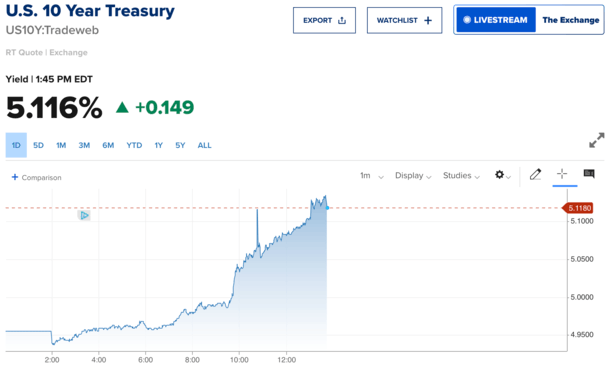
The bellwether 10-year bond yield surged higher today after a hot inflation report, rising nearly 20 basis points.
At the same time, President Trump ratcheted up his threats against Iran, putting pressure back on oil prices.
The question remains; how high can mortgage rates go?
Mortgage Rates Highest Since January 2025 as Inflation Continues to Run Hot
Just like that, mortgage rates are on the rise again.
What had been a solid week for mortgage rates now appears to be completely erased and then some.
The latest reason why is we got a PMI report for September this morning that showed the economy is still running hot.
It revealed that business activity surged to the fastest pace since 2021, while job growth increased to a four year-high.
When the economy is too hot, inflation becomes a concern. And given inflation has already been top of mind for years now, anything above consensus isn’t good.
Especially when the Fed is already in another hiking cycle, which started with their latest ¼-point hike a week ago.
As such, we’re now looking at the highest rates since January 2025.
That means we’re looking at the highest mortgage rates of Trump’s second term as well.
Not great given the midterms are just a month and change away.
Housing is a top concern for Americans, and if mortgage rates are at new highs around the midterms, sentiment will be very poor.
Politics aside, it’ll just pour even more cold water on the housing market.
Home sales have been at 30-year lows for years now and it looks like 2026 will be no different.
If these high rates continue into 2027, or get worse, we’ll probably see home sales dip even further.
At the same time, mortgage refinance activity will come to a standstill and we’ll have another scenario where mortgage lenders face an existential threat.
[Try out my free mortgage rate calculator to compare rates side by side.]
How High Could Mortgage Rates Go?
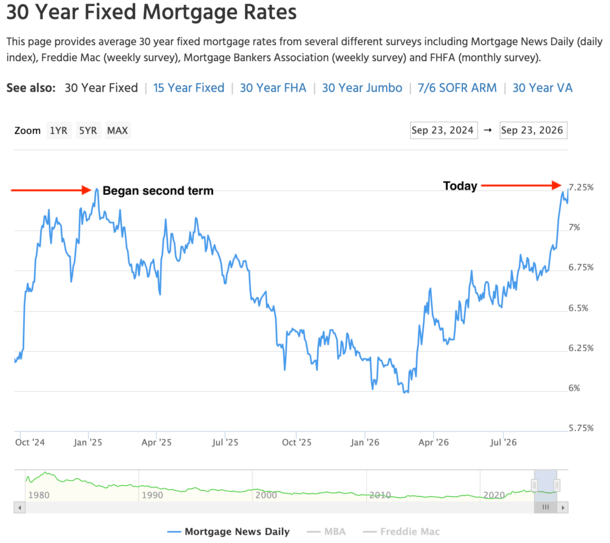
As it stands, they’re back to early 2025 levels around 7.25% for a 30-year fixed.
If we continue to get hot economic data that points to worsening inflation, the Fed will need to hike more than expected.
The odds of an October rate hike surged to over 73% today from 55% yesterday, per CME FedWatch.
There are now a possible four rate hikes in the cards by mid-2027, which if they come through, could push mortgage rates higher with them.
The Fed doesn’t set mortgage rates, but Fed rate expectations (e.g. a sustained hiking campaign) can lead to higher mortgage rates.
In this case, 30-year fixed mortgage rates would likely front-run the Fed and rise before the additional hikes came through.
The next stop would be around 7.50%, last seen during spring 2024.
Assuming it gets even worse than that, then you’re looking at those 8% mortgage rates we saw back in late 2023, which was the peak this cycle.
Hopefully it doesn’t come to that. But it all depends on the data.
If the inflation data continues to come in hot, mortgage rates will be rising.
The same goes for the Iranian conflict. If that continues to ratchet up or simply not improve, it puts more pressure on energy prices and inflation. Oil prices were falling all week, but reversed course today.
If we can somehow solve one or both of these issues, mortgage rates might avoid this worst-case return to cycle highs.

- Mortgage Rates Now Highest Since Trump Took Office - September 23, 2026
- Mortgage Rates Are Nearly 1% Apart Between Lenders Right Now - September 22, 2026
- Are Mortgage Rates Going Up or Down? - September 21, 2026