
Mortgage rates are even lower today, inching their way closer and closer to a 6-handle.
And once again tech stocks are getting hammered, pushing a lot of money toward the safety of bonds.
When that happens, their corresponding yields (or interest rates) drop, and that spells relief for mortgage rates.
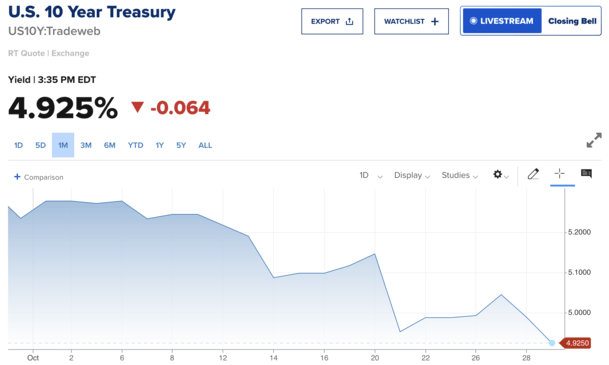
The bellwether 10-year bond yield was down another seven basis points (bps) after Amazon and Intel spooked the market.
It’s the one silver lining in an otherwise gloomy situation, but only if you’re actually in need of a mortgage right now.
Tech Stocks Continue to Rattle the Market, Pushing Money Into Bonds
The other day we saw Alphabet shares get rocked. Today, we saw Amazon and Intel get hit, the latter of which plummeted over 30% at last glance. Yikes!
Intel said it might not achieve positive cash flow, an issue we’ve heard a lot of recently.
It appears all that infrastructure and AI spending is catching up to these companies, even if they do eventually profit from the buildout.
That has rattled investors, who were loving the high returns from AI-related names but now might be having second thoughts.
If they all of a sudden say hey, bonds look pretty attractive here with near-5% returns, that takes pressure off mortgage rates.
And that’s basically what we’ve been seeing, despite other headwinds like inflation, high oil prices, and the ongoing Middle East conflict.
[Compare five different mortgage rates side by side with my mortgage rate calculator.]
Why Do Falling Tech Stocks = Lower Mortgage Rates?
It’s a classic flight to safety.
When investors get nervous about stocks, they tend to sell and buy bonds instead, especially U.S. Treasuries, which are guaranteed to be paid out.
More demand for bonds pushes their price up and yield down.
As we know from many years of data, 30-year fixed mortgage rates tend to follow the 10-year yield in veritable lockstep.
So if you ever want to track mortgage rates, simply look at the 10-year bond yield and you’ll have a pretty good idea as to their direction.
If the 10-year yield drops, 30-year fixed mortgage rates should be lower on the day as well.
If the yields go up, which they did for the past few months until recently, 30-year fixed mortgage rates should also rise. And boy did they ever.
For perspective, the 10-year bond yield was as high as 5.365% in early October, the highest level since 2002, and now back below 5%.
You can thank the stock market rout for that, and basically nothing else.
The fact that yields fell despite data showing the economy grew at its fastest pace in a year with inflation running hot says a lot.
In other words, even hot economic data couldn’t stop the bond rally as fears of an AI bubble take center stage.
But What Does a Tech Selloff Mean for Home Buyers?
Here’s the problem with this recent mortgage rate rally.
Lower rates driven by fear and wealth destruction aren’t the same as lower mortgage rates driven by good news, like falling inflation.
If tech stocks keep sliding, that hits 401(k)s and other retirement accounts that many buyers may have been counting on for a down payment. Or for reserves.
Or simply to feel comfortable making a 6- or 7-figure home purchase.
And that diminishing wealth effect could eventually weigh on home sales even as interest rates improve.
Of course, it’s not definitive yet. October is notoriously bad for stocks and this year hasn’t disappointed.
If tech stocks bounce back, bond yields could pop right back up too and take mortgage rates with them.
And remember, mortgage rates are slow to fall and quick to rise.
Read on: How are mortgage rates determined?

- Tech Selloff Keeps Pushing Mortgage Rates Closer to the 6s - October 30, 2026
- Zillow’s New Zero-Down FHA Loan Comes at an Interesting Time - October 29, 2026
- Mortgage Rates Catch a Small Break Despite Hot GDP - October 29, 2026